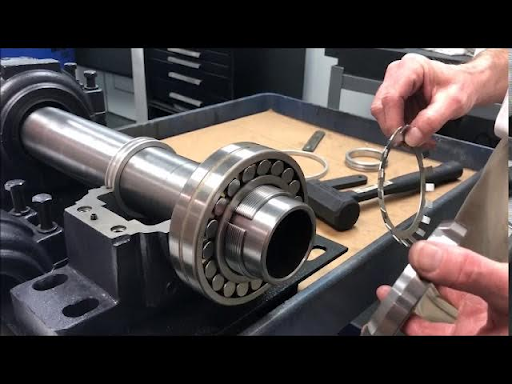
If I think back to that incident almost 10 years ago when I was standing on a factory floor in Pune – it was in the middle of a very humid July – and staring at a gearbox that was so badly jammed that, as it turned out, the whole line of an automotive industry customer had been stopped for many hours. Each hour of stoppage was costing them huge money. When we opened the gearbox after a thorough inspection, we came to know that a bearing had broken. On paper, it was supposed to be the right one. It looked perfect. But at the literal moment of extreme heat, the steel just gave up.
I feel that incident totally changed my perception. It dawned on me that if we as Indian manufacturers always run our equipment at the edge of efficiency, face fluctuating power supply, dust, and high temperatures, then the very core of your machinery is not just a part with a certain serial number but it is the whole manufacturing process of that part.
Frankly, it is not easy to select a tapered roller bearing manufacturer. There are big global companies, well-known Indian enterprises, and countless small-scale players all of them screaming “World-class quality”. But how do you really know the truth behind those factory doors? I would like to do some unveiling today and talk about the manufacturing process. We will figure out why some steps can never be skipped and how you as a buyer or an engineer can identify a genuine craftsman from a mere corner-cutter.
1. The Raw Material: It Starts in the Fire
Basically, even if you have the most sophisticated robots in the world but you start off with “doubtful” steel then you are just making a high-tech paperweight.
The absolute standard for a tapered roller bearing manufacturer is high-carbon chromium steel (particularly SAE 52100 or an equivalent). However, “purity” is a pretty complicated term. The Indian market where raw material prices experience wild swings is always tempted to use “reclaimed” or low-grade scrap.
Why going for pure material must be your first step
- Inclusion Levels: You can think of inclusions as some tiny spots of “dirt” in the steel. When tapered bearings are under the very heavy radial and axial loads, those dirt spots become points of high stress.
- Fatigue Life: If you use high-purity steel it will not only have a longer life; its failure will also be more predictable. You would prefer a bearing that gradually deteriorates as opposed to one that breaks up suddenly without any signs.
- Enquire with the Manufacturer: “Where do you get your tubes and bars from?” If they are not able to present you with a material test certificate from a well-known mill then it’s a red flag. A serious tapered roller bearing manufacturer will be backward integrated or have supplier audits at a very high level.
- Forging and Ring Rolling: Shaping the Soul
When the steel is ready it is sliced into “slugs.” This is where the “magical” transformation (along with the destruction) happens. There are basically two processes: cold forging or hot forging.
Cold forging is perfect for making small bearings because it’s very accurate. However, when it comes to those heavy-duty Indian infrastructure projects, hot forging followed by ring rolling is the best. In some factories, the rings are just “machined” straight from a tube. I’ve seen that. It is just to be cheaper, of course, but it’s a fundamental blunder.
Grain Flow, a little detail with big consequences
Forging alters the arrangement of the metal’s fibers by wrapping them in a loop around the bearing. Make an analogy of cutting wood where the wood fibers are running, and not across them.
- What gives forged rings their edge is how they handle stress without breaking. Strength comes through the process shaping them, making cracks less likely.
- Machined-only Rings: They are very likely to experience problems due to “grain run-out” which means that the bearing will fail prematurely when put under high stress.
In case a manufacturer is “in a hurry to get new products to the market” make sure that this is not their excuse for forging step omission.
- The “Black Magic” of Heat Treatment
If you tell me then heat treatment is where the true industrial chefs differentiate themselves from the rest of the food lovers. You start out with these soft steel rings and end up turning them into something extremely hard and yet elastic at the same time.
The Process of Hardening and Tempering
A top-grade tapered roller bearing manufacturer has controlled-atmosphere furnaces. The parts are heated to approximately 850 °C, quenched in oil, and then tempered.
- Case Hardening vs. Through Hardening: Certain equipment like underground mining machines that encounter frequent high impact loads require case hardening (hard on the surface, “tough,” and slightly flexible on the inside).
- Dimensional Stability: If the heat treatment is not done perfectly, the size of the bearing will actually change after some time when it is in use. Just picture a bearing that “grows” a few microns while inside your machine. It is the last thing that you want!
Anyway, I always insist on seeing their heat treatment log sheets. If they do not have it as their own department, then they must carefully control the quality level of their vendor.
- Grinding and Super-finishing: The Micron Game
This is the step when the bearing really turns around after the heat treatment, the parts are distorted and black. Grinding brings them back to their final dimensions.
However, I want you to know that a tapered roller bearing “taper” must be absolutely spot-on. If the angle of the inner race (the cone) doesn’t perfectly match the angle of the rollers, you get “edge loading.” That’s the scenario when the pressure isn’t spread; it is just that one tiny corner which bears the whole load.
The Importance of Surface Finish
- Super-finishing (Honing): It is a step further than grinding. It gets rid of the peaks left by the grinding wheel making the surface so smooth that it looks like a mirror.
- The Lubrication Film: A super-finished surface enables a very thin film of oil to stay intact. When it is not there, the result is metal-on-metal contact, heat, and finally, the smell of stuff burning that is so familiar.
I’ve witnessed a few Indian “value” brands that skip this final honing stage just to save a little money. They may seem shiny to the naked eye but if you look at them through a microscope such surfaces resemble a mountain range. So beware of the shiny surfaces.
- The Rollers and the Cage: The Supporting Cast
There is no denying we give all our attention to the rings but what really do the rollers, as the name suggests, carry all the load. The manufacturer has to ensure that in each tapered roller bearing every single roller is of exactly the same size within a couple of microns.
The Reasoning Behind Sorting
- Should a roller stand larger than its peers, pressure shifts entirely to that piece – others do nothing but idle. This one stressed component wears down fast; once it gives out, the full bearing quits working.
When things shake a lot – say on Indian trains or in big crushing machines – the part that keeps rollers in place tends to fail early. That piece, usually shaped from steel or plastic, has one job: keep each roller where it should be. If you’re dealing with rough conditions, picking a maker known for tougher versions makes sense. Breakage starts there more than anywhere else.
6. Inspection and Assembly: The Final Gate
When you come to a manufacturer, they should be extremely careful and almost suspicious in their work at this stage.
The “Must-Have” Checks
- Noise and Vibration Testing: With the help of an “Anderon” meter. A bearing that is noisy doesn’t have much of a life left. It is a sign that the geometry is wrong; however, it is undoubtedly a defect that you cannot see with the naked eye.
- Dimensional Gauging: This is all about measuring the bore and the outside diameter.
- Crack Detection: Methods such as magnetic particle inspection or eddy current testing are used for discovering any cracks that may have gone unnoticed during the heat treatment phase.
Whenever I talk about it, I say it only once: if the manufacturer does not have an in-house NABL-accredited lab, then dealing with such a manufacturer is like gambling. You want a supplier who does testing on the entire batch and not just samples every six months.
7. The Price vs. Value Paradox in India
You might guess what I’m going to say next. “This is all very costly.” and guess what, you are correct. Doing something properly definitely costs more than doing it “good enough”.
There are some firms in India who will be able to give you a price quote that is as much as 30% below the market leaders’ price. One cannot help getting drawn in especially when the purchasing department is so persistent with its “cost cutting” orders. But don’t forget my tale from Pune!
Geared-up with the knowledge of the real price of “cheap”
- Energy Loss: If a bearing is of inferior quality, it tends to have more friction. That means an energy waste that is converted into heat.
- Repeat Purchases: While the good quality bearing might last you around 5 years, the cheap one would probably last just 1 year. That means the “cheap” one ends up being 5 times more expensive plus you have the additional expense of the labor costs involved in replacing it.
- Risk of Catastrophic Failure: In some industries such as aviation or heavy lifting a bearing failure is not a mere inconvenience but a safety disaster.
8. How to Choose Your Tapered Roller Bearing Manufacturer
Assuming that you are not an expert in metallurgy then how would one go about verifying a tapered roller bearing manufacturer? This is my personal checklist:
1. Certifications are the Floor, Not the Ceiling
At a minimum, be up to date with ISO 9001:2015. Besides, keep an eye on specialized standards – take IATF 16949 for car manufacturing or IRIS in rail systems. When companies send goods to Europe or the United States, chances are they carry VDE or UL certifications. That kind of mark often means their products stay steady in quality.
2. Modernity of the Plant
Get a plant tour. Are they still using manual lathes from the 70s or are they equipped with CNC grinding lines with automated loading? Quickness of process is not the only thing automation is about; it also means mistake-free work. A machine cannot have a “bad day” and forget to check a dimension.
3. Application Engineering Support
Great manufacturers don’t just sell you a bearing and that’s it. They want to know “What’s your RPM? What’s your lubrication system? What’s the ambient temperature?” A manufacturer that does not get deeply involved in your application is one that is only trying to sell a commodity and is not concerned with the creation of a partnership.
4. Supply Chain Resilience
Due to the instability of global steel prices, you should get a manufacturer that is able to operate within risk. Is there sufficient stock? Can they provide delivery even if you have an emergency?…
Conclusion
A bearing seems basic at first glance – its job, after all, is just handling resistance. Yet what goes into making one? Far from straightforward. Every choice matters greatly, starting with how clean the metal is, continuing through careful finishing steps, each affecting the result deeply. What stands out isn’t the part itself, but the intense care built into something so small, revealing how much craft hides inside ordinary machinery.
Visit classicstylemag for more informative blogs.