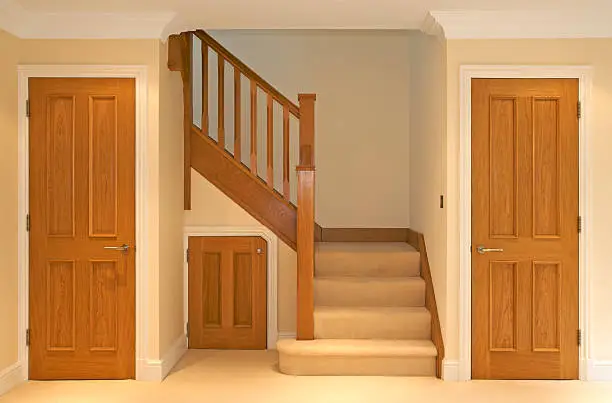
If you are currently in the middle of a renovation or even just daydreaming about one you have probably realized that the big stuff gets all the attention. Kitchens and bathrooms are the rockstars of the home improvement world. But what about the quiet details? The doors you open and close dozens of times a day without thinking about it?
Here is a hot take: your internal doors deserve a promotion.
Specifically, oak interior doors. They aren’t just a way to cover a hole in the wall. They are a long-term investment in how your home looks, sounds, and feels. And if you are wondering whether they are actually worth the hype (and the price tag), you have come to the right place. Let’s walk through why upgrading to oak is one of the smartest moves you can make for your home.
What Makes Oak Interior Doors Different From Standard Doors?
If you have lived in a house with standard hollow-core doors, you know exactly what they feel like. They are light. They sound a bit hollow when you close them. They do the job, but they don’t exactly scream “luxury.” Oak interior doors are the complete opposite .
Oak is a hardwood. It is dense, heavy, and incredibly tough. While a softwood door might dent if you accidentally bump it with a vacuum cleaner, oak laughs it off . The dense grain structure means it resists scratches, dings, and the general wear and tear that comes from daily life .
When you upgrade to oak, you aren’t just buying a door. You are buying a piece of furniture that happens to be attached to your wall.
Do Oak Doors Actually Increase Home Value?
According to industry experts and real estate reports, the answer is a resounding yes. High-quality interior finishes can significantly increase the resale value of a home, with some estimates suggesting that homes with premium upgrades sell for up to 10% more than comparable homes without them .
Oak interior doors signal something important to potential buyers: quality. When a buyer walks through a house and feels the satisfying weight of a solid oak door, they subconsciously register that the homeowner didn’t cut corners . It suggests the property has been well-maintained. It’s a small detail that creates a massive impression of luxury and permanence .
Are They Really That Much Tougher Than Other Materials?
Let’s put oak in the ring with some other popular materials.
Compared to composite doors, oak is generally superior when it comes to impact resistance. Composite doors are great for low maintenance and moisture resistance, but the surface can chip or peel over time with rough handling . Oak, on the other hand, takes a beating and still looks good .
Compared to pine or MDF, there really is no contest. Softer woods dent. MDF can swell if it gets wet. While oak interior doors do need to be protected from extreme humidity, a properly finished oak door can last for decades often outliving the rest of the house .
Won’t Oak Look Dated? (The 2026 Style Verdict)
I hear this one a lot. People associate oak with the heavy, orangey, overly rustic doors from the 1990s. But here is the good news: oak interior doors have had a major style makeover. For 2026, oak is very much in fashion it just looks different now .
Modern interior design is moving toward biophilic elements (bringing nature indoors) and warm minimalism. Oak fits this perfectly. Instead of highly ornamented, dark-stained doors, the trend is clean lines and light finishes. Think simple Shaker styles or the popular Mexicano design, finished with a clear matt varnish or hard wax oil .
The natural grain of the wood adds warmth and texture to what might otherwise be a sterile, all-white modern home. It softens the look. So no, it won’t look dated if you choose the right style and finish .
Is It True That They Help With Noise?
If you work from home, or you have teenagers, or you just value a moment of peace, listen up. Density blocks sound. A hollow door is basically a drum skin. Oak interior doors, particularly solid oak or engineered core oak doors, are excellent at dampening sound transmission .
This is huge for bedrooms, home offices, and media rooms. It isn’t professional soundproofing, but the difference between a hollow door and a heavy oak door is night and day. You get more privacy, and you get less noise bleed throughout the house .
The Installation Reality: What Do You Need to Know?
Okay, a dose of reality. Oak is heavy. A solid oak door can weigh anywhere from 30kg to 55kg . You cannot hang this on the same flimsy hinges as your old hollow door.
- Let it settle.
Oak is a natural material. It needs to acclimatise to your home. If you hang it immediately after unwrapping it, the wood might move as it adjusts to your humidity levels. Experts recommend laying the door flat in the room where it will be installed for at least a few days before fitting . - Seal everything.
This is the golden rule. You must finish all six sides of the door—including the top and bottom edges. If you skip the bottom edge, moisture will creep in, and the door may warp or swell . - Use three hinges.
Do not use two hinges. You need three heavy-duty hinges to support the weight and prevent sagging over time .
Solid Oak vs. Veneer: Which Should You Choose?
You will face this choice quickly in your search. Both are technically oak interior doors, but they are very different products.
Solid Oak:
This is 100% hardwood through and through. It is the ultimate in durability. If it gets scratched in ten years, you can sand it down and refinish it. It feels incredible. However, it is expensive, heavy, and can be sensitive to extreme changes in humidity .
Oak Veneer (with Engineered Core):
This is a thin layer of real oak bonded over a core (usually plywood or MDF). The best versions have a “solid engineered core.” For most modern homes, this is actually the smarter choice. It is more stable than solid wood (less likely to warp), lighter, and cheaper. The look is virtually identical, but you cannot sand it down multiple times.
For the average homeowner looking for the best balance of cost and performance, a high-quality engineered oak veneer door is often the winner.

How Much Trouble Are They to Maintain?
Less than you think. If you buy a pre-finished door, there is zero maintenance. Just wipe it with a damp cloth and avoid harsh chemicals .
If you buy an unfinished door (which is often cheaper), you will need to apply a protective coat of oil, wax, or varnish before installation . This is non-negotiable. However, that initial effort pays off. Once sealed, you only need to reapply the finish every few years to keep it looking fresh .
If you are looking for a home upgrade that delivers daily satisfaction (every time you walk through a door) and long-term financial return, look no further. Oak interior doors blend toughness, timeless beauty, and modern functionality better than almost any other finish on the market.
Whether you go for solid oak heirlooms or stable, cost-effective veneers, you are making a choice that will serve your home for decades.
Frequently Asked Questions About Oak Interior Doors
- Do oak interior doors add value to a house?
Yes. They are viewed as a premium feature that suggests quality craftsmanship. This can increase the perceived value of your home and help it stand out to buyers . - Are oak doors worth the extra cost?
Absolutely. While the upfront cost is higher than pine or MDF, the longevity and durability of oak make it more cost-effective over time. You won’t need to replace them in ten years. - Can I install oak interior doors myself?
If you are a competent DIYer, yes. However, you must account for the heavy weight and ensure the frame is solid. You must also let the door acclimatise and seal all edges. Many homeowners prefer professional installation to guarantee a perfect fit . - What is the difference between solid oak and oak veneer?
Solid oak is solid wood throughout. Oak veneer has a real oak surface layered over a different core material. Solid oak can be sanded many times; veneer generally cannot. Solid oak is heavier and more expensive . - Can oak doors be used in bathrooms?
Yes, but with caution. Oak must be treated with a moisture-resistant finish to prevent swelling and warping in high-humidity environments . - How long will an internal oak door last?
With proper care and maintenance, a solid oak door can last for decades—often the lifetime of the property . - Do I need special hinges for oak doors?
Yes. Due to the weight, you should always use three high-quality hinges per door, rather than the standard two . - Can I paint my oak doors if I get tired of the wood look?
Yes, you can paint oak doors. You just need to prepare the surface properly with a suitable primer . - Are oak doors fire-rated?
Yes, you can purchase specific oak fire doors (often rated FD30 or FD60) that provide 30 or 60 minutes of fire protection while still looking like a standard oak door . - How do I clean an oak door?
Dust regularly with a soft cloth. For deeper cleaning, use a cloth that is slightly damp (not wet) and wipe the surface dry immediately. Avoid abrasive cleaners.
Visit classicstylemag for more informative blogs.